Differential Scanning Calorimetry Analysis

Understanding the thermal properties of pharmaceutical materials is essential for evaluating product quality, stability, and performance throughout the drug development lifecycle. Temperature changes can affect a material’s physical properties, potentially influencing formulation stability, manufacturing processes, and product performance. Differential Scanning Calorimetry (DSC) is a thermal analysis technique used to characterize thermal transitions, including melting, crystallization, and glass transition behavior. BA Sciences provides DSC testing services to help pharmaceutical and biopharmaceutical manufacturers better understand material properties, support formulation development, and assess thermal stability.

As part of our comprehensive pharmaceutical raw material testing services, BA Sciences provides Differential Scanning Calorimetry (DSC) analysis to help pharmaceutical and biopharmaceutical manufacturers evaluate material properties, thermal behavior, and stability. Our DSC testing capabilities support raw material characterization, formulation development, and pharmaceutical quality assessment by providing valuable insight into thermal transitions and material performance.

With advanced analytical instrumentation, experienced scientists, and a strong commitment to cGMP compliance and regulatory requirements, BA Sciences delivers reliable analytical data to support informed decision-making throughout the pharmaceutical development lifecycle.

Contact Us

"*" indicates required fields

This field is for validation purposes and should be left unchanged.
Name*
Company Address*

How the DSC Process Works

Differential Scanning Calorimetry (DSC) is a thermal analysis technique used to evaluate how pharmaceutical materials respond to controlled changes in temperature. Understanding these thermal properties is important for assessing material stability, identifying physical transitions, and supporting pharmaceutical formulation development and quality control. Temperature changes can influence material characteristics, potentially affecting drug product stability, processing, and performance.

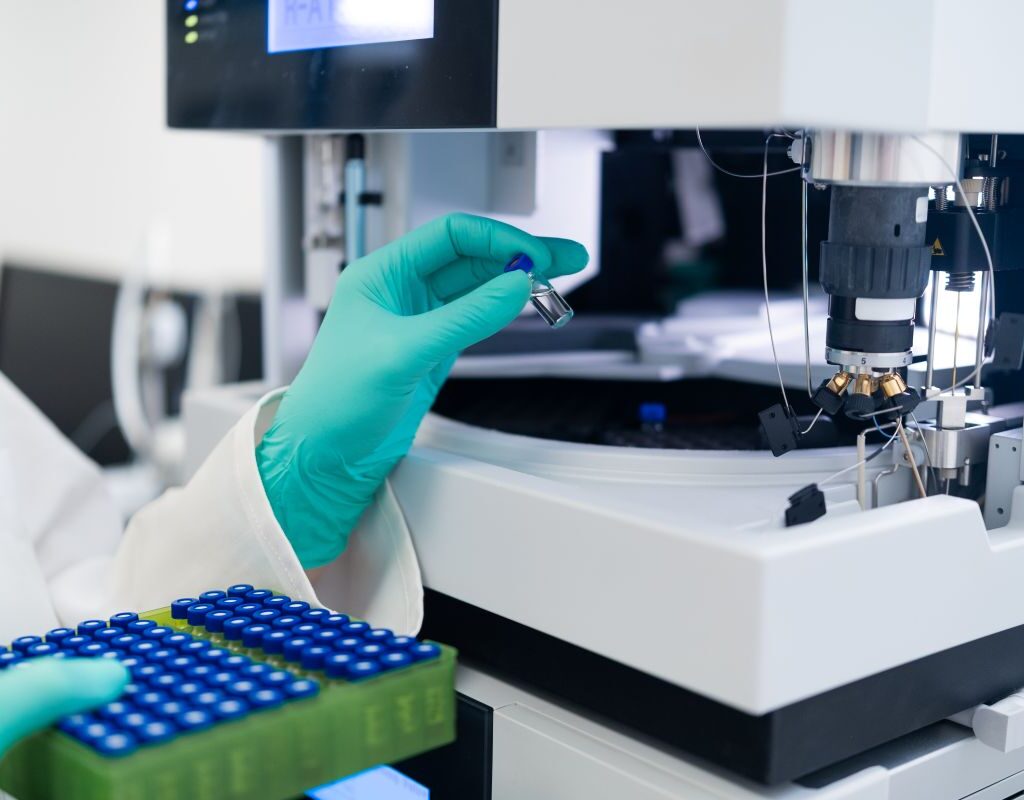
During DSC testing, a small sample of the pharmaceutical material is placed in a sample pan alongside a reference pan. Both are subjected to a controlled heating or cooling program while the instrument measures differences in heat flow associated with thermal events in the sample.

As the temperature changes, DSC analysis can detect thermal transitions such as melting, crystallization, and glass transitions, as well as certain thermal reactions or decomposition events. The resulting data are displayed in a thermogram, which illustrates heat flow as a function of temperature or time. This information helps scientists characterize material properties, evaluate thermal behavior, and identify potential changes that may affect pharmaceutical product development and stability.

BA Sciences provides DSC testing services as part of our comprehensive pharmaceutical raw material testing and analytical characterization capabilities. Our experienced scientists work with clients to determine appropriate analytical approaches based on material characteristics, testing objectives, and applicable quality requirements.

Why Choose to Work with BA Sciences?

BA Sciences provides reliable Differential Scanning Calorimetry (DSC) testing services backed by experienced scientists, advanced analytical instrumentation, and a strong commitment to quality and regulatory compliance. Our team supports pharmaceutical and biopharmaceutical manufacturers with thermal analysis and material characterization to help evaluate raw material properties, formulation stability, and product quality.

We understand that every pharmaceutical development program has unique analytical requirements. That’s why BA Sciences provides personalized laboratory support, including a dedicated project manager to facilitate communication, coordinate testing activities, and help align analytical approaches with project objectives and timelines.

With more than 35 years of analytical testing experience, BA Sciences delivers dependable data and responsive support through our comprehensive pharmaceutical raw material testing services, helping clients make informed decisions throughout the drug development lifecycle.

Frequently Asked Questions (FAQs)

Why do pharmaceutical companies use differential scanning calorimetry?

Pharmaceutical companies use Differential Scanning Calorimetry (DSC) to evaluate the thermal properties, physical stability, and behavior of active pharmaceutical ingredients (APIs), excipients, and drug formulations. DSC testing helps identify thermal transitions, including melting, crystallization, glass transitions, and polymorphic changes. It can also support drug-excipient compatibility studies, raw material characterization, and formulation development by identifying thermal events that may affect product quality and stability.

How long does DSC testing normally take?

The duration of DSC testing depends on the sample characteristics, temperature range, heating and cooling rates, and analytical requirements. A routine DSC analysis may take approximately one to two hours to perform, while additional time may be required for sample preparation, data interpretation, and reporting. BA Sciences works with clients to establish testing requirements and project timelines based on their specific analytical needs.

How are samples prepared for differential scanning calorimetry?

DSC testing typically requires a small sample, often between 1 and 10 mg, depending on the material and analytical method. Pharmaceutical samples are commonly analyzed in solid or powdered form and placed in a suitable sample pan for controlled heating or cooling. Sample preparation requirements, including sample size and pan selection, depend on the material’s properties and the objectives of the thermal analysis.

Ready to get started? Tell us about your upcoming project

Tell Us About Your Project